I took the train to Finchley Road and then walked to Hampstead Heath Station. I proudly walked the hilly route to my destination and arrived almost 30 minutes early. I walked along the parade of shops looking for a place to have a coffee and rendez with Harry and I stumbled across a cafe called Redemption Roasters. Only when Harry arrived did I find out that the Redemption element referred to the fact that the coffee bar helped and employed ex-convicts. Find out more about their mission. There are 10 sites scattered across central London as well as Hampstead.
After our chat while Harry drank his coffee we walked around the corner to our first stop on our Hampstead trail. Here we discovered Keats House.
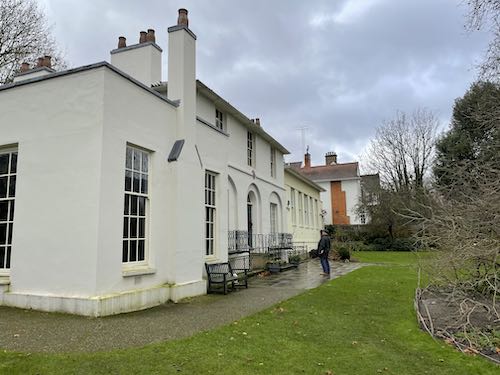
We entered the gardens of Keats House and found a collection of gardeners drinking coffee in the shelter of the ….
Harry had is first wee of the tour.
We left our poets temporary home and walked up the hill. Harry had a little trouble ascending the inclines throughout our journey. I’m surprised he choose such a hilly environment for our tour.
From here we popped over to the house of Lee Miller the photographic chronicler of the 30’s and WWII.
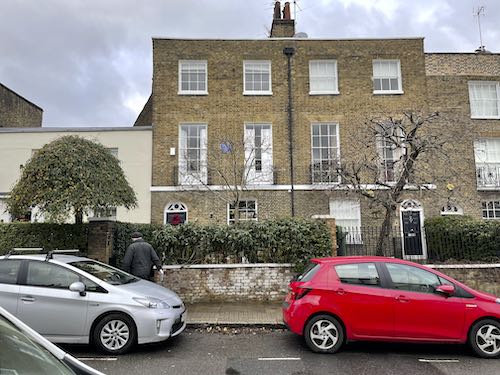
According to the blue plaque another famous resident Roland Penrose also occupied the property. Although they were roughly contemporary I don’t think they did so at the same time.
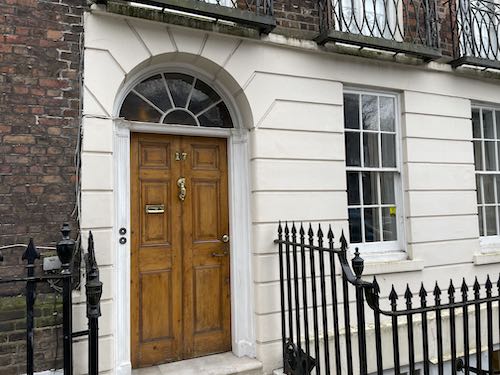
A small detour and we looked upon number 17 ….. the house of HG Wells, he of The War of the Worlds fame. For some reason no plaque recorded his residence. We also walked past some houses that recorded famous people not mentioned in Harry’s book. The most famous of these unmentioned literary giants Robert Luis Stevenson stood out.
From ….we joined the hustle of Hampstead High St, climbed the hill crossed the road and passed through an alley and looked into the window of Savills Estate Agency. Here we could have a bought a £19.5m home. Probably a bit too big for just 2 people but surely impressive for the odd hanger on who we would bound to acquire if we could afford the property.
Across the road to the local parish church which celebrated its milenium in 1986. Apparently there had been a place of worship on this spot for 1000 years. The Benedictine monks had farmed the area and needed a place to worship during the day. The church in front of didn’t seem ancient at all.
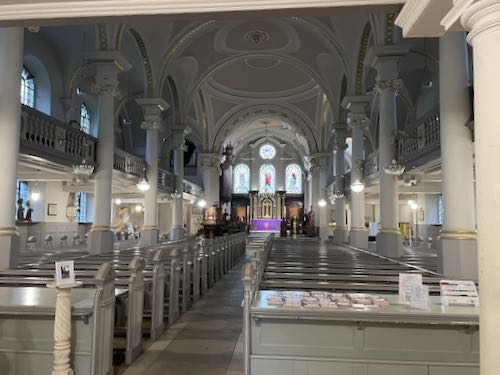
The interior reminded me of a 19th c non-conformist chapel with its balcony area. Indeed St John-at–Hampstead’s current building dates to the 19th C.
As we walked out we saw the large tomb of Bill Gates. I’ve always wanted the simplest of cremations. You’re not around to admire the edifice so why bother. However, when you look around this and other cemeteries it’s not an opinion shared by everyone. Further on in our tour we saw a very kitsch memorial to some unknown character with an angel holding a child underneath very large structure. Perhaps this was the burial site of a baby and assuage the grief of the parents.
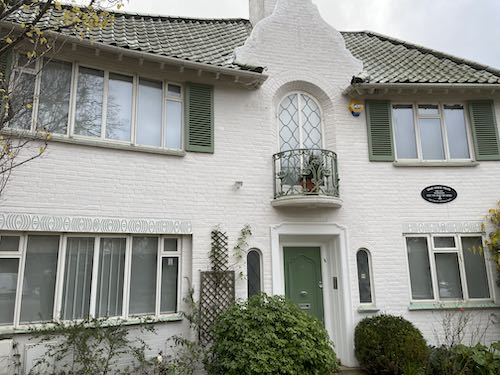
We descended and came across the house built by Gracie Fields. The green roof tiles, very 30s, Harry loved as well as the large shape on the top. Apparently she married an Italian and decamped to the Isle of Capri during the war. Her ex-home sat at the end of a private road which explains why so few cars parked there.
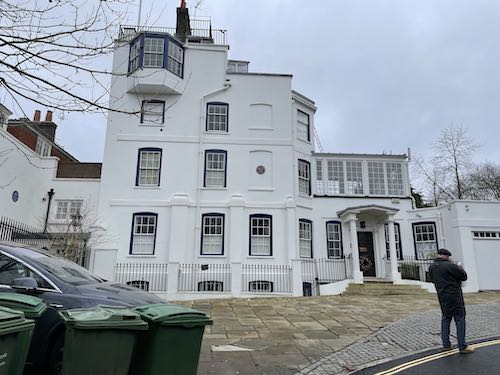
Another climb which took us past the home of Stevenson and then onto Admirals House. The local postman who told us that a previous resident from the navy used to fire a canon from the flat roof on important navy and royal occasions. He also mention that he had a raucous evening of drinking at the Magdala Pub, the inn where Ruth Ellis shot the man for which she became the last woman hanged in the UK. Another story for another time.
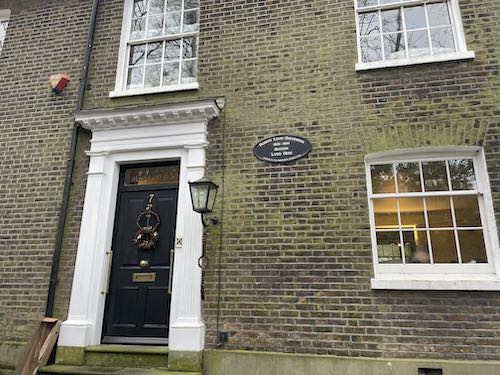
The plaque on the wall remembers Sir George Gilbert Scott the 19th C architect who has passed me by. However next door the plaque recalls John Galsworthy of whom I am familiar and whose many books I’ve read. Our author fails to have a mention in Harry’s walking guide.
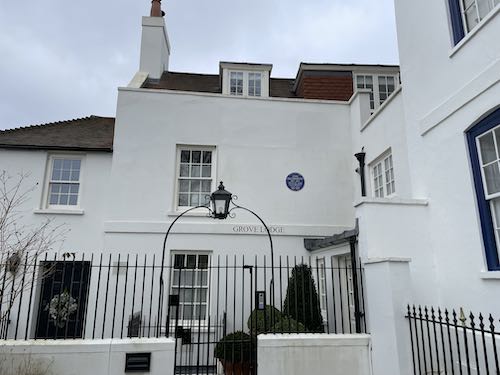
We had reached our geographical high point and we descended. To recover from all our exertions we adjourned to The Holly Bush pub where I messed around as a teenager. The main people I hung around at this place included Paul, Charlie Weber, Mike Thompson and a couple whose name I can’t remember.
Our conversation, as we supped our pints, became very morbid. I told the story of the death of Maggi’s brother and his partner, followed the horror tale faced by our friend Walter and his dire troubles. Harry then recounted how he had officiated at a recent funeral etc. The cemeteries we had passed had probably stimulated our thoughts of death and the inevitable.
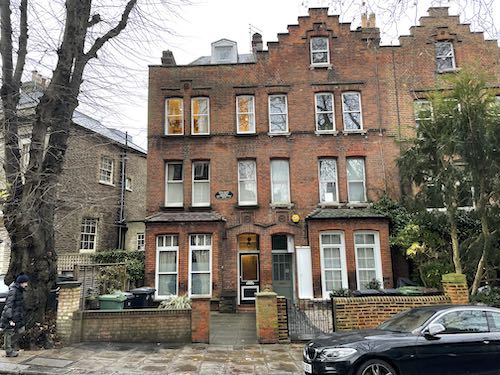
After only one pint at the Holy Bush we walked on and downward. As you descend of course the houses tend to lose their grandeur. We pass by quaint 18th C cottages and 19th C homes now converted into half-dozen flats each. We drudge on and see the home of Mary Stokes, campaigner for birth control for women amongst other social issues.
Finally we arrive back just near Hampstead Heath Station and we search for a place to eat. We end up at Zara a Turkish and Anatolian diner. The people gives a friendly greeting as we enter and immediately the place assumes a warm atmosphere. We share a bottle of wine. I choose the shish with rice and salad. All very tasty without being clever. They give us a treat that Harry enjoys with his coffee.
After the meal we part ways and wish each other a happy Xmas and a healthy new year. How many more will we share?