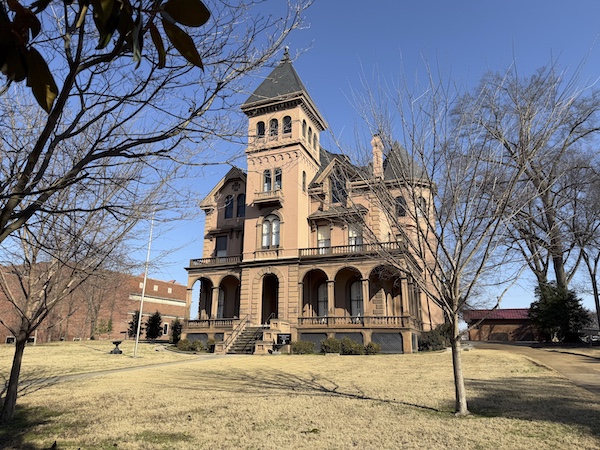
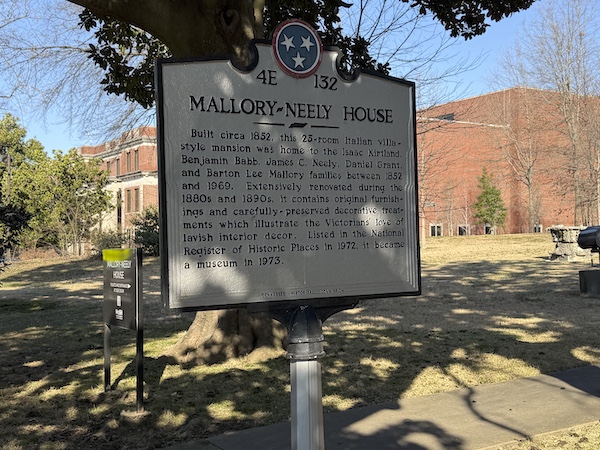
We said goodbye to Memphis after a quick drive past what the locals call “Millionaires’ Row.” It’s a short stretch of a few enormous 19th-century houses, leftovers from a more opulent era. One of these monstrosities is now a museum, though it was firmly closed when we rolled by. I couldn’t help but wonder what the original owners would make of their grand homes sitting silent behind iron gates while the city around them has changed so completely.
The Road to Clarksdale
If you ever need to test the limits of your sanity, drive from Memphis to Clarksdale. The route is straight, flat, and aggressively boring. For mile after mile, there is nothing—just an endless ribbon of highway cutting through farmland that sits either empty or fallow. No crops, no livestock. Just dirt.
Every so often, a tiny hamlet appears on the side of the road like a mirage, though not a pleasant one. These are clusters of mobile homes and wrecked cars, rusting quietly in the sun. Between these sad little outposts, the only things breaking the monotony are the occasional trees marking the boundaries of multi-acre fields. It’s the kind of landscape that makes you grateful for a tree.
Clarksdale
You know a town is struggling when your first introduction is two pawn shops on the same road into the centre. That was our welcome to Clarksdale.
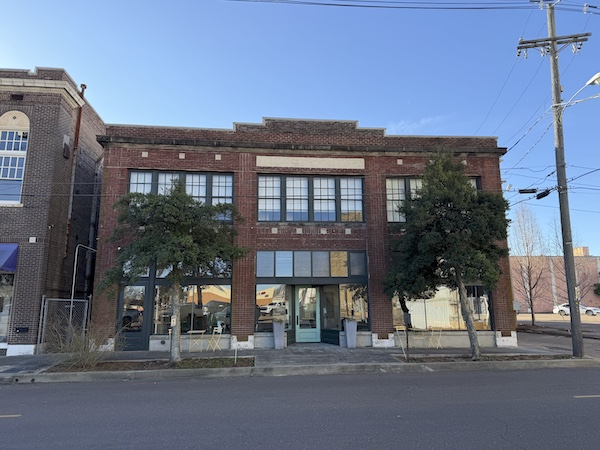
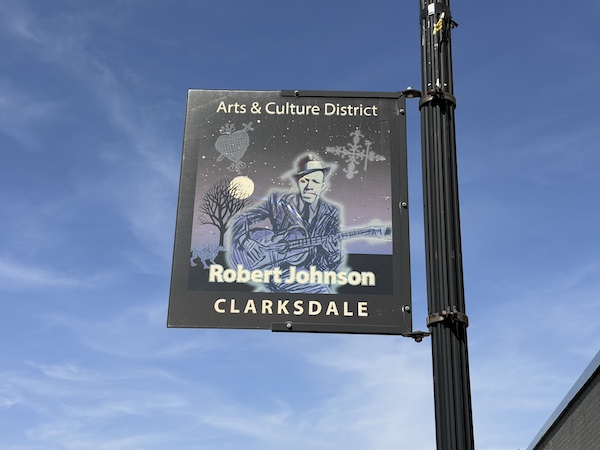
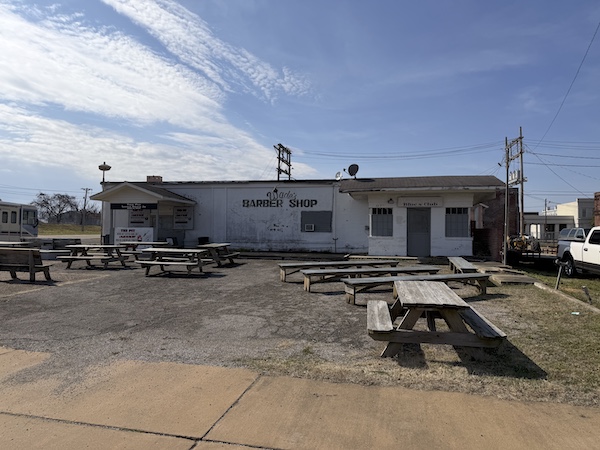
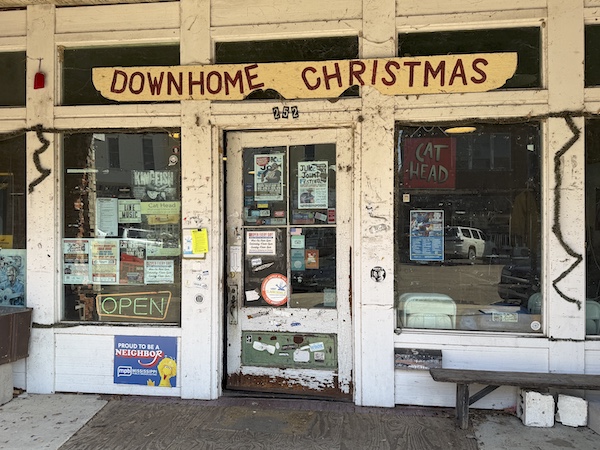
We found the Traveler’s Hotel surprisingly easily, tucked into what passes for the arts and cultural district here. It’s a nice idea on paper, but the whole area suffers from the post-industrial blight that seems to haunt so many American small towns. Over half the retail spaces are empty. Boarded-up windows, faded signage, and the kind of silence that feels heavier than noise.
Dutch Oven
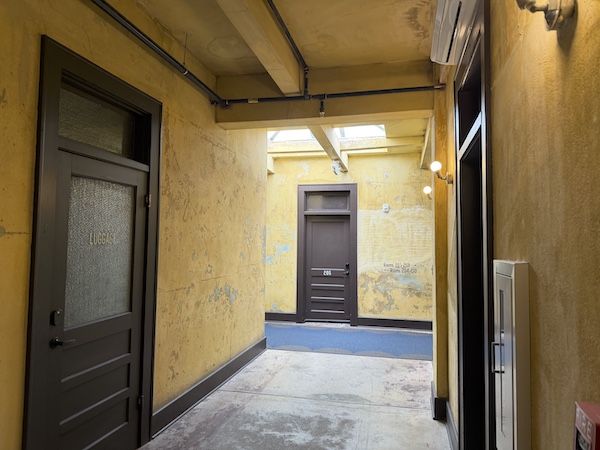
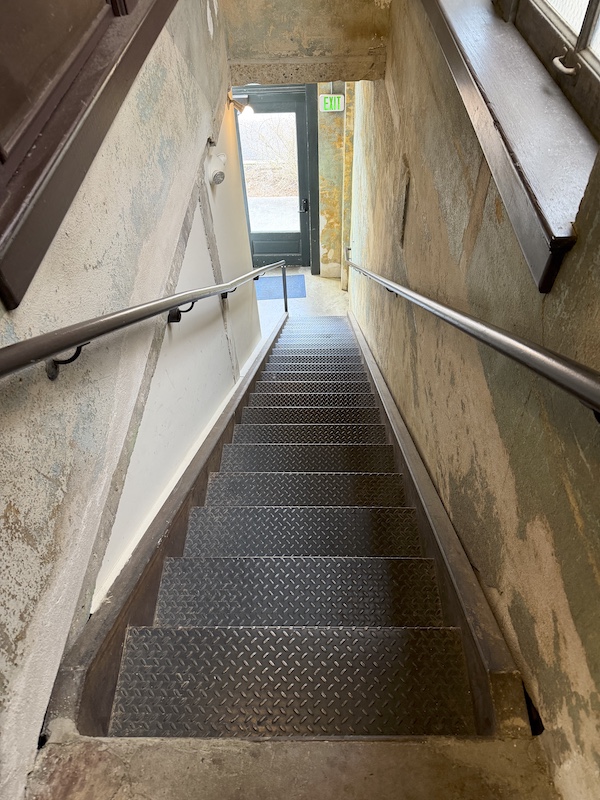
The hotel itself is an interesting beast—some kind of converted industrial building or maybe old offices. You walk up metal stairs to the second floor, past filthy windows and walls where the plaster is crumbling. The common areas have that neglected, transitional feel, like the renovation ran out of money halfway through.
But then you get to the room, and it’s a different story. The bedsheets are crisp and clean. The floor is spotless. The bathroom could pass a white-glove inspection. It’s a strange contrast—rough around the edges but fundamentally sound. I decided I could live with that.
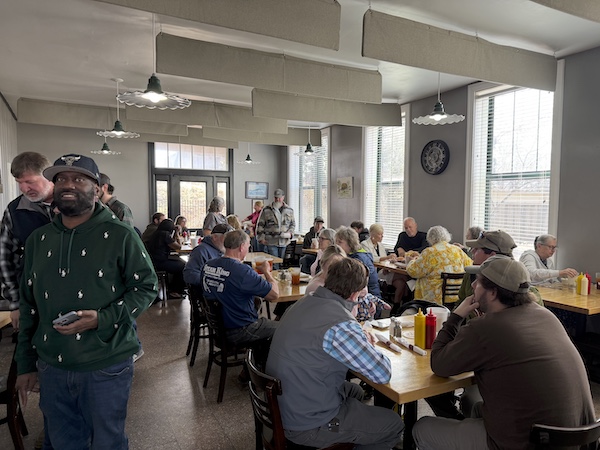
One of the young workers at the hotel recommended a lunch spot just around the corner. We followed the advice and walked into a busy little place where every waitress wore a cap. For a moment, I wondered if they might all be Jewish, though I didn’t ask—some questions feel intrusive even when innocent. The food arrived on plastic plates lined with greaseproof paper. I had a sandwich that was perfectly fine. Nothing more, nothing less. It filled a hole.
Afternoon
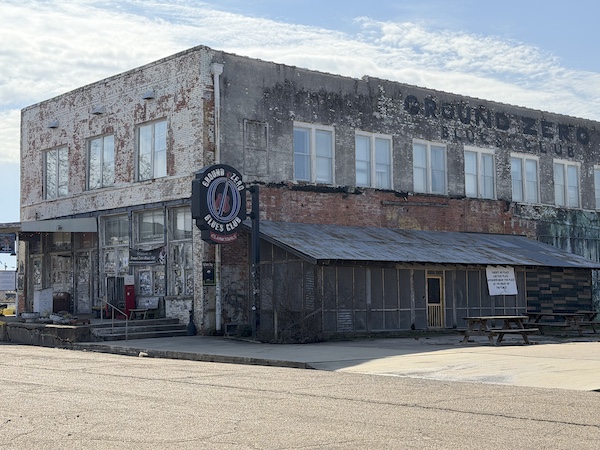
We spent the afternoon wandering, scouting for somewhere to eat that evening. It was a dispiriting exercise. Nothing looked promising. We eventually settled on Levon’s, a bar-restaurant owned by an Australian of all people. It felt like the least bad option. We also located Ground Zero Blues Club, which we’d already earmarked for the evening’s entertainment. At least that gave us something to look forward to.
Evening
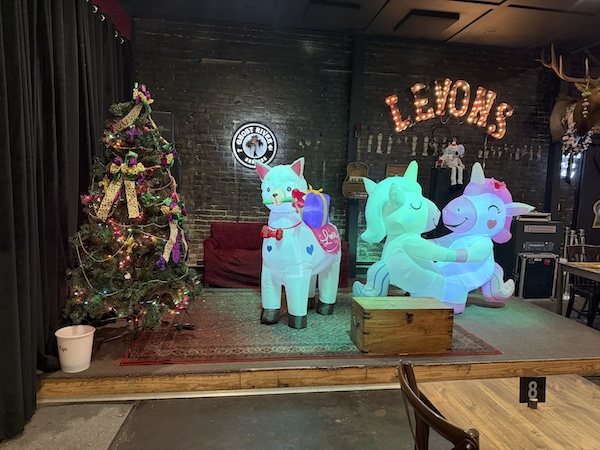
Dinner at Levon’s was an experience, though not necessarily a good one. I ordered a salad, which arrived and was… okay. Edible but unremarkable. The whole place had an odd vibe, like it couldn’t decide what it wanted to be. The decor was strange and mismatched, and the layout was so sprawling that the single waiter spent the whole evening sprinting from one end of the restaurant to the other. You could see the stress on his face. I felt for him, but I wouldn’t dream of returning.
Then we walked to Ground Zero, and the day finally turned a corner.
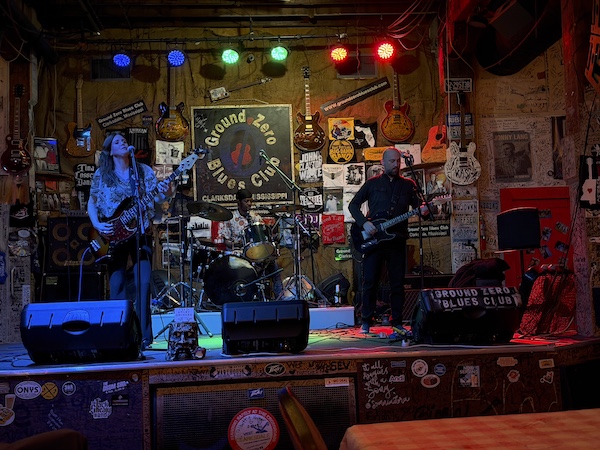
The club is owned by a group that includes Morgan Freeman, which gives it a certain cachet. We arrived at 7:15, and the place was almost empty—maybe twenty people in a space that could hold five hundred. The band, Suga Heavy and the SweTones, weren’t due to start until 8, so we ordered drinks and let the blues music pumping through the speakers set the mood.
At $10 cover, it felt like a bargain.
The band was a trio—bass, guitar, drums—and they were tight. They played well, with the kind of loose, lived-in sound that makes the blues feel alive. For an hour or two, the empty shops and derelict lots outside didn’t matter. The post-industrial blight faded away. There was just the music, the drinks, and the feeling that we’d found the real Clarksdale after all.